Showing posts with label creative colchester. Show all posts
Showing posts with label creative colchester. Show all posts
Sunday, April 11, 2021

Sunday, March 7, 2021
Unfamiliars: Tales for the Fireside 2
Putting together my contribution for the Unfamiliars: Tales for the Fireside 2 zine started by considering the title, the first thing that came to mind for me was the first line of many fairy tales, 'once upon a time'. The use of these phases would draw upon shared public language and resonate with others familiar with fairy tales.
 |
| Once upon a time... |
From taking this initial start point I then explored how to expand this. I often work with automatic writing due to its nonsensical outcomes. I employed my smartphone here, to create digital automatic texts which followed on from the phases, 'once upon a time'.
To create these outcomes I entered the phase and then selected the predicted text, this adds a personal element to the outcome as the phone draws on my most used language. I wanted to move away from these outcomes - mostly as it turns out I am not that exciting and the outcome was not as playful as I had hoped!
 |
| Digital Automatic Writing |
The second exploration on the start phrase was to look at synonyms for the words, finding words that mean the same thing as each word component. This exploration is the one I decided to develop, it allowed me to start breaking the language and moving it away from the shared public language of the initial phase and move towards something more Dada. The change is slight but enough to distort the reading a little.
 |
| Synonyms |
Once each of the words in the phrase had been replaced I start to put them together using my ACcomplte4 plaster letters. The maternity of the final outcome is not particularly important, it is just the medium I am currently interested in working in.
Final Outcome
Sunday, February 21, 2021
Sunday, February 14, 2021


Sunday, December 27, 2020
A Four Lettered Word - Part Four
This project has ind of fallen away a little. This is as I always have more than one project on at any one time. However, I have played with digitally altering the image. This was an attempt to blur the text.

While this did work, I worry that it makes the text too unreadable - the central letters feel OK to me, but the outer letters are becoming lost.
I am note sure where I will go with this idea, or if it will just fade away into the night.
I think that i is good to remember that not all projects and ideas will work out, that is just part of the creative journey.
Sunday, December 6, 2020
CAS Christmas Online Exhibition
Head over to the Colchester Art Societies website to check out our Christmas Online Exhibition. All works are for sale, so you might just find the perfect gift there too (for yourself, or for someone else!).
Find us here: https://www.colchesterartsociety.co.uk/
My offering this year, is 'END'.

END makes use of two of my The Road Sign Collection lino cuttings. Designed to be a wall hanging, bring the outside in with this wooden sign.
Sunday, November 22, 2020
The Ten Minute Session: Blind Line Drawing
Description
Look at the object, not looking at the paper
Draw with the eyes, allow the pencil to trace what you see
Instructions
1.
Pick an object that you have to hand; a cup, your phone
2.
Set yourself up with some paper and a pen or pencil
3.
Look at your object carefully, decide where you are going to
start your drawing from
4.
Put your pen on the paper – do not look at the paper – and
follow the shape of your chosen object with your eye and more your pencil to
follow your eye movements
Task One
Complete a 30
second blind line drawing
Task Two
Complete a 2-minute blind line drawing
Sunday, November 8, 2020
The Ten Minute Session: Draw This
Description
Follow these instructions to create your own work of art.
Task
one
Instructions
1.
On a piece of paper draw a large circle
2.
Inside the circle draw, towards the bottom of the circle draw a
semi-circle
3.
In the top left quarter of the circle draw a smaller circle
4.
In the top right quarter of the circle draw an identical circle
to the one you just draw
5.
Outside od the circle draw a straight line going from the edge
of the circle to the edge of you page, every 1cm
Task Two
Write
your own set of instructions for others to follow, post them below.
Sunday, November 1, 2020
Developing a Peer Support Programme: Part Three: Online Creative Practitioner Support Programme
I've not talked about the Creative Practitioner Support Programme on here in while so catch up with part one and part two first if you like!
Like with everything in 2020 the Creative Practitioner Support programme had to move online due to COVID. For the programme this transition was not too painful and in the end quite rewarding.
The main reason we were able to make this transition quickly was that we already had an online home, our Facebook Page, which allowed us to easily make contact with our attendee. We did not miss a session and went straight online the week of lockdown, letting our attendees know we would be there for their creative outlet needs!
There where changes to our online delivery
- We went from hosting 2 sessions a month, to a session every week
- We explored Zoom before Facebook introduced Rooms
- We were able to extend our offer to those outside of Colchester/the surrounding area
The main difficulties came from the tech (as always!), getting people onto Zoom, Zoom cutting out after 40 minutes and then once we moved to Facebook Rooms the issues of attendees not having Facebook accounts!
As we get use to the 'new normal' (sorry), the Creative Practitioner Support Programme sessions have gone back to twice a month, giving attendees time between session for their practice to grow.
One of the benefits that has comes from online offer has been the ability to grow our community, but also for our community to take more ownership of the Facebook Page. The page, unlike our in-person offer, is active 24/7 and attendees can - and do - post outside of our scheduled sessions. This is great as it allows for creatives to access advice and support whenever they need it and it also allows conversations to carry on over a longer period of time.
It will be exciting to see what happens with the Online Creative Practitioner Support Programme going forward!
If you would like to join us, give the Facebook Page a 'like'.
Sunday, September 13, 2020
Collaborating with a bird.
My art practice often explores breaking language and I found a new way to do this, this summer. Creating letters from bread and placing them in the garden for nature to break.
I usually create work that other humans will interact with, however with lockdown a collaboration with a bird was the only option.
The inital idea was to spell out something on the grass with the bread letters, however the bird was too eager to take part and swooped in before I could do this.
They do say never work which children or animals after all.
Sunday, May 10, 2020
Developing a Peer Support Programme: Part Two: Creative Practitioner Support Programme
Need to catch-up? Read part one here.
Expansion came in the form of moving to work with SPACE to develop
the idea of a peer support programme.
Many of the same principles stood from Colchester Crit Collective,
including the importance of it being something that happens outside of
traditional arts education, with a much simpler structure (Vidokle and Rosler,
2008)
The Graduate and Creative Practitioner Support Programme was
officially launched in October 2018 and offered two free sessions a month to
creatives and continues to this day as the Creative Practitioner Support Programme. Sessions now run every third Thursday and fourth Saturday at 12-2pm. This along with the regular rooming makes the sessions more welcoming and predictable.

The notion of building a supportive community (Day, 2012)
The sessions allow for facilitated dialogues to take place (Lermans, 2018), rather than the sessions being a free-for-all, there is an element of structure. As the session facilitator I will manage attendees expectation and keep an eye on timing. Each attendee is asked if they wish to show work or are just there to observe. Those showing, will be asked to outline what it is they want from the session; do they have a specific set of questions they want answering, do they want their peers initial reactions to work. or something else. This allows for attendees to access the kind of support they require. This is also beneficial to attendees in terms of being able to bring more perspectives to the development and aid problem solving (Latham, 2018). Peers are able to offer critical analysis, allowing attendees to expand their practices and to sharing knowledge (Davis and Tilley, 2016). Receiving peer feedback also highlights the opportunity for the attendees to become more self-reflective and critical about their own practices (Percy, 2004).
Our
Facebook group has also grown, bringing together our attendees on a digital site. This has allowed us to implement the use of technology into our offer (Wojak and Miller, 2015), allowing all of the elements listed above to continue outside of the meeting room. We currently have around 70 members within our Facebook group. This group is actively used by attendees, to continue conversations and for networking.
The Creative Practitioner Support Programme is currently in its second year. We will be running sessions every third Thursday and fourth Saturday until July 2020, when we stop for the summer break.
The sessions allow for facilitated dialogues to take place (Lermans, 2018), rather than the sessions being a free-for-all, there is an element of structure. As the session facilitator I will manage attendees expectation and keep an eye on timing. Each attendee is asked if they wish to show work or are just there to observe. Those showing, will be asked to outline what it is they want from the session; do they have a specific set of questions they want answering, do they want their peers initial reactions to work. or something else. This allows for attendees to access the kind of support they require. This is also beneficial to attendees in terms of being able to bring more perspectives to the development and aid problem solving (Latham, 2018). Peers are able to offer critical analysis, allowing attendees to expand their practices and to sharing knowledge (Davis and Tilley, 2016). Receiving peer feedback also highlights the opportunity for the attendees to become more self-reflective and critical about their own practices (Percy, 2004).
The Creative Practitioner Support Programme is currently in its second year. We will be running sessions every third Thursday and fourth Saturday until July 2020, when we stop for the summer break.
References
Davis,
R. and Tilley, A. (2016) What they didn’t teach you in art school: What
you need to know to survive as an artist. Ilex.
Hattie,
J. and Timperley, H. (2007) The Power of Feedback. Review of Educational
Research. 77 (1).
Lermans,
L. (2018) Critical Response Process. [online]
brooklynartscouncil.org. [accessed 04/02/20].
Vidokle,
A. and Rosler, M. (2008) Exhibition as School as Work of Art. [online]
www.art-lies.org/article.php?Id=1661&issue=59&5=1. [accessed 05/02/20].
Wojak,
A. and Miller, S. (2015) Starting Your Career as an Artist: A Guide to
Launching a Creative Life. Allworth Press; Second Edition.
Sunday, April 5, 2020
My Current Artist Statement
My artistic practice explores
the use of text and site, examining how the context of a site can change the
reading of any given text and provides the cultural frame work for the art work
to exist within. The work produced is usually temporary, drawing on notions of
time and place, duration and mutability. This is echoed in the use of language,
as that too is affected by these factors. Language changes depending on when
and where it is exists, and the meaning of words is edited and changed as time
passes. Nothing is fixed and my practice focuses very much on nowness.
One of the main processes which
takes place within my practice is the playing with language, I will often use synonyms
and antonyms. I enjoy breaking language and pushing it to its limits; whether
this means the use of repetition or removal of text until the language no
longer makes sense. The text used within
my work varies: some works use found text, others are created by automatic
means – the silliness of Dadaism draws me in. However, in both instances they depend
on our shared public language and social facts. The everyday nature of language and its accessibility to audiences
appeals to me.
The notion of audience/audiencing and
community/communication are important to my practice, as the work exists outside
of an art gallery context. Therefore, the viewers of the work may not necessarily
be looking at it intentionally. To engage this everyman audience, I strive to make text choices which comment on
life, rather than art. One of the main reasons I use text within my practice is
because we have temporal relations with
it and thus, even if the viewer does not reach the same interpretation as my
intention, they are still engaging with it on some level. Time and place come
into play here too, as the same text will be read differently by the same
person if the text is placed in a new site. The text used within my practice is
often vague and
embraced the audience’s interpretations of the text and the loss of control
over it, echoing Barthes feelings on the Death of the Author.
My practice lends itself to
installation work, the usual criteria for sites used within my practice are the
Duchampian
unchoice. These territories appeal to me due to their usually overlooked
presence.
My process swings
between two opposing pillars; choosing text specifically fitting to sites and
putting text into sites and allowing it to resonate. These are varying
processes, however I find the process of both compelling, as either way a
dialogical relationship will take place between the art and the site [and the audience]. Working within different sites
appeals to me as each has their own specific limitation and these
limits help to establish and frame the text.
My practice takes a DIY
approach, again infused with Dadaism, as such I use materials which are often
inexpensive and processes that are easily accessible. Simplisticity
can rule and as such the text is curated into the site carefully.
Sunday, March 8, 2020
Continued...The Road Sign Collection - Series One Development (Firstsite Collectors Group Bursary)
The Road Sign Collection drawings are now complete.

Next Steps
- To print and review The Road Sign Collection
- To cut down The Road Sign Collection from 71 to 50
- To seek peer advice on The Road Sign Collection; How to group the work, How to cut down the collection to 50 signs
- Look into types of book; shape and size, visual/colouring

Next Steps
- To print and review The Road Sign Collection
- To cut down The Road Sign Collection from 71 to 50
- To seek peer advice on The Road Sign Collection; How to group the work, How to cut down the collection to 50 signs
- Look into types of book; shape and size, visual/colouring
Sunday, February 9, 2020
The Firstsite Collectors Group Annual Party
Friday night (7th
February 2020), I attended the Firstsite Collectors Group Annual Party, hosted
at Firstsite to celebrate the 2019 bursary winners. The event was attended by
members of the Firstsite Collectors Group, bursary winners and members of the
Firstsite team, including director Sally Shaw.
The evening was
a great networking opportunity and to meet others involved. There was chance for
the bursary winner to display something of their art practices. For this I
decided to show my three artist books and my current sketchbook. I presented
the artist books as they fully document the last two years of my art practice,
with images and short art essays. While my sketchbook documents my current
ideas and the start point for what it is that I will be using my bursary for.

Each bursary winner had the opportunity to speak about their art practice and what it is they are planning on doing with their bursary. It was really insightful to listen to the other creatives talk about their artistic processes and ideas; from artists drawing and painting from across rivers, on trains and from Instagram to artists print making and attending research trips.
Within my speech I spoke of my general art practice being based around text and site and how historically I have utilised very DIY, hands on methods and materials, such as; wood, plaster, string and paper. I went onto to discuss how with the bursary I would explore digital outputs to develop The Road Sign Collection. The end goal being to create an artist book, or artist colouring book, wanting to have an outcome which could be interacted with by an audience.

Within this time, I also explored some of the aspects of The Road Sign Collection that compel me to continue with this project. Touching on their everyday nature and our individual experiences with them and how they exist both as mass produced objects, as well as originals, with each having their own history which is documented in their visage.
The opportunity to talk about my art practice in an environment such as Firstsite, is unique and a valuable learning experience. There are few other situations in which to flex and develop this skill set.
Attending the Firstsite Collectors Group Annual Party prompted me to reflect on my experience of the process of applying for and receiving the bursary.
I found the process of applying for the Firstsite Collectors Group bursary useful in that it made me articulate myself and my ideas in a more coherent way – having to write within word counts also helped. I was conscious that those reading the application may not have encountered my practice before and wanted to ensure that I did not overlook any aspect of my practice.
Receiving the bursary is a great vote of confidence and goes someway to externally validating what it is you are doing. From a practical point of view, it offers much needed funding to allow artists to continue to develop – from a personal viewpoint I would not be able to justify investing in software such as Photoshop without the bursary. However, it also comes with some pressure as there is a slight feeling of being accountable to others with reference to what it is you are creating. Something that I have mot felt since leaving university. This is an exciting position to be in and I look forward to seeing what it is i create and develop by December 2020.
You can read more about the Firstsite Collectors Group and the 2019 bursary winners here.
Saturday, December 28, 2019
2019 Recap
As 2019 comes to an end I look back on the exhibitions, events and publications which I have featured in. This year was a bit different from the others as it was the first year that I have been out of education. The year has been spent working out how to juggle being a practising artist, with real life commitments.
Scroll down to see what I have been up to!

2019 was also an exciting year for the Creative Practitioner Support Programme (Previously known as the Graduate and Creative Practitioner Support Programme).
We completed out first year of peer-to-peer feedback sessions, hosted a Collaborative Installation Residency and started our second year of peer-to-peer feedback sessions.

To find out more about the Creative Practitioner Support Programme visit our Facebook page: https://www.facebook.com/groups/269213273718843/
Thank-you for your support in 2019, here is to an exciting 2020!
Scroll down to see what I have been up to!
58th
Essex Open Exhibition
‘This
Way’
Beecroft
Gallery, Southend
29/11/12
- 16/12/19


Poetry
Sound Collection
‘Page
Forty Three’
Poetry
Sound Library Online: https://poetrysoundlibrary.weebly.com/
19/01/19
– Present


WOTISART?
‘done’
Art
Magazine
February
Edition


Unfamiliars:
On Wonder
‘WONDER’
The
Minories, Colchester
22/03/19


Secret
Art Sale
‘you
are here’, ‘you are here’
The
Minories, Colchester
29/03/19
– 30/03/19


Harwich
Shorts
‘Word-by-Word’
Harwich
Festival
20/06/19
– 30/06/19


Colchester
Art Society Summer Exhibition
‘Playing
Cube’, ‘String Words’
The
Minories
21/06/19
– 26/07/19


Unfamiliars: On Friends and Family
‘Communication Cards’
Odd One Out
28/06/19


The Travelling Sketchbook
‘turn over’
SPACE Colchester
18/07/19


Communication Cards
‘Communication Cards’
Edinburgh
10/08/19


Lowland
‘Its’, ‘Layers’
Ateliers Künstlerhaus Stuttgart, Reuchlinstr.
4b
06/ 09/19

Polemical Zine
‘PLAY’, ‘FUN’
Online
01/10/19


Coastal Open
‘x’, ‘to the sea’
Jaywick Martello Tower
12/09/19 – 27/10/19


Colchester Art Society
‘Playing Cubes’
Beecroft Gallery
07/09/19 – 02/11/19


Falling Walls
‘Road Sign Postcards’
SVA Gallery / Nau Gallery
01/11/19 – 16/11/19 / 04/12/19 – 10/12/19


Museum of Human Kindness
‘Wallet’
Online
13/11/19

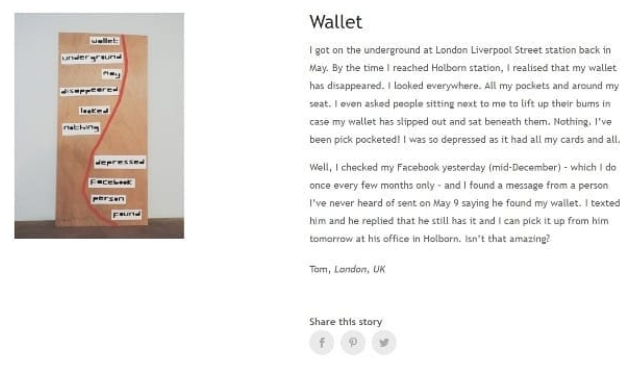
Folds
‘Paku-Paku’
Lewisham Project Space
20/11/19 – 01/12/19


Colchester Art Society Winter Exhibition
‘Page Forty Three’, ‘PLAY’
The Minories
07/12/19 – 31/12/19


New Emergence Art
‘Playing Cubes’
newemergenceart
16/12/19

2019 was also an exciting year for the Creative Practitioner Support Programme (Previously known as the Graduate and Creative Practitioner Support Programme).
We completed out first year of peer-to-peer feedback sessions, hosted a Collaborative Installation Residency and started our second year of peer-to-peer feedback sessions.

To find out more about the Creative Practitioner Support Programme visit our Facebook page: https://www.facebook.com/groups/269213273718843/
Thank-you for your support in 2019, here is to an exciting 2020!
Subscribe to:
Posts (Atom)
-
Cairns, A. (2024) ‘Finding Peace in the Artist-Teacher Identity: A Comparison Between Artist-Teachers in Adult Community Learning and Higher...
-
 To achieve my AFHEA I had to demonstrate how, within my teaching I meet two of the five areas of activities outline in the UKPSF (2011). T...
 -
 This is something that I have been considering lately, in reference to audience and audiencing of the road sign (Rose, 2013). The natural ...