Showing posts with label Benjamin. Show all posts

Sunday, October 4, 2020

Borders: Tickets, Please

Tickets, Please, draws it inspiration from the train journey that connects Colchester and Ipswich. The train ticket allows us to cross over the border. It is elevated above what it is, a piece of card and it becomes something that give your access to a service. In a similar way, with this piece I am also elevating a piece of card to something else, a piece of work that exists in the art world.

The work draws on the train ticket as a symbol and hints at the original with the use of replicating the size, shape and lines of an original. I wanted the work to be recognisable but not to be a copy a when working with reproductions something from original is always lost (Benjamin, 2015) and so I wanted to avoid this by taking inspiration and elements, rather than the train ticket as a whole. 

The medium has been chosen to add a DIY quality and uniqueness to the objects, something that their inspiration lacks. As train tickets are mass produced and computer generated. This addas a human element to the aura of the artwork and is fitting to my art practice.

The work itself is sculptural – not 2D. It is intended to exist laying on a surface, preferably the floor – where it seems from experience most train tickets end up (or at least it seems that way!). There are parallels here too to the train station floor and the gallery floor, they are both spaces that are overlooked in everyday life, which is another reoccurring theme in my practice, the Duchampian unchoice territories (O’Doherty, 1986).

There is an intended simplicity here which helps give the audience immediate access to the work (Stiles and Selz, 2012). Just by putting something on the floor, draws attention to it, make it similar to the everyday encounter of the original train ticket and that experience of looking down at it (Virilio, 2010) and helps to replicate a moment from real life. It allows me to try and emulate that immediacy and experience of being in the moment and spotting something (Hayward, 2004).

The text on the tickets is taken from the letter coding used for each location within the context of the railways system.

It uses, as all of my art does, our shared language (Wittgenstein, 2007) and social facts (Burke and Crowley) – in this case social facts specific to train stations (COL instead of Colchester / IPS instead of Ipswich). All language aims at communicating something (Delacroix, 1924 in Ullmann, 1962) and

my use of linguistics within the artwork (both of the text and the title) sets out to communicate notions around train stations, to engage the mind of the viewer and take them to that train station context (Saussure, 2013, p19).
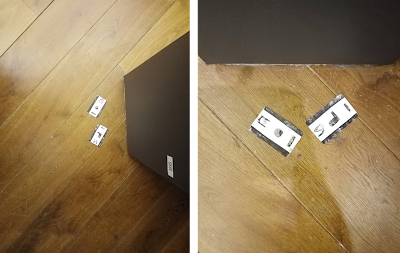

A picture of an art installation
Tickets, Please at Firstsite

The work itself has changed since its inception, in meaning and in placement. I used to travel by train between Colchester and Ipswich three times a week for work – the pandemic ended that, and now I do not even work there and never returned before I left due to home working. This now represents a moment from my past, whereas when it was created it was my present. The work too changed once in situ at Firstsite, with photos showing slight movement in placement, something you come to expect with floor-based works.


References


Benjamin, W. (2015) Illuminations. London: Penguin.

Burke, L. and Crowley, T. (2000) The Routledge language and cultural theory reader. London: Routledge. (The Politics of Language).

Hayward, K. (2004) City Limits: Crime, Consumer Culture and the Urban Experience. Routledge-Cavendish.

O’Doherty, B. (1986) Inside the White Cube. University of California Press.

Saussure, F. (2013) Course in General Linguistics. Duckworth; New edition.

Stiles, K. and Selz, P. (2012) Theories and Documents of Contemporary Art: A Sourcebook of Artists. University of California Press

Ullmann, S. (1962) Semantics: An introduction to the science of meaning. Oxford: Blackwell.

Virilio, P. (2010) Art as Far as The Eye Can See. London: Bloomsbury.

Wittgenstein, L. (2007) Lectures and Conversations on Aesthetics, Psychology and Religious Belief. ed. Cyril Barrett. Berkeley and Los Angeles: University of California Press.


Sunday, March 1, 2020

Inspiration: From Classroom to the Studio

It happens ever increasingly, that as well as (hopefully) inspiring my learners my session also push my own art practice forward.

In the first instance this was with the line drawing. This time round it is with pointillism. Within this session we were exploring different styles of art to create drawings in. 

Pointillism, or Neo-impressionism is usually used in painting, however within the session we used the style to draw with, this style allows you to create images by building up dots on a page. Within the session we worked with primary colours and dot placement to create outcomes which would then blend together when viewed. Pointillism is depended on the eye and mind to turn the dots viewed into a fuller ranger of tones.


Within all my session I like to provide a range of artist reference, this ensures that the learners have an awareness of what had come before them, as they cannot create art in vacuum (Melee and Cramerotti, 2013). This week we explored the work of artists such as; Roy Lichtenstein, Paul Klee, Georges Seurat and Damian Hirst. By exploring a numbering of artists learners are exposed to a range of ways in which the style has been, can be used.


L-R: Roy Lichtenstein: Modern Art (1996), Paul Klee: Seaside Resort in the South of France
(1927), Georges Seurat: Le Bec du Hoc, Grandcamp (1885), Damien Hirst, Damson Mousse (2016)

Within the session we also looked at the work of Bradley Hart, who expands the Pointillism style by utilising a very everyday item - bubble-wrap. He takes advantage of the pre-existing circles and injects each with paint. 

Bradley Hart, Insomnia, 2009
Within the session we took inspiration from Hart, albeit minus the injections, and used bubble-wrap as one of our materials. The technique we used was to paint directly onto the individual bubbles and then either leave it at this stage, or to then create a print from the painted bubbles. We also used cotton-buds and anything round we could get our hands on. 
In relation to my own practice I found the work of Hart particularly compelling due to the concepts behind the outcome. Our start points echo each other, both beginning with photographs, he with images from his own personal collection, mine with my personal collection of images of road signs. The issue of the mass produced also pops up for the both of us; bubble-wrap is mechanically mass produced, as are my source materials: road signs. This lowers the value of these items (Benjamin, 2015). However, his process tries to tackle this - as does mine - by turning these mass-produced items into originals of sorts. this is achieved by the outcomes being hand rendered and time consuming (Hart, 2019), allowing them to become the antithesis of the mass produced.
As such we are both also dealing with the issue of originals and copies, due to the subject matter and materials we are dealing with. Our works take the mass produced and turn them into originals of sorts (Judovitz, 1998), giving each their own authenticity an aura (Benjamin, 2015). We then both end on the audience’s individual reaction, or interpretations of the work. What does it mean for the viewer to experience each of these outcomes? 

Initial Outcomes
Within my sessions I always have the intention to also take part in the activities, as this allows me to model techniques and styles to learners - allowing them to learn through observation and imitation of behaviours (Bandura, 1977). This can also encourage them to partake in activities which may seem new or difficult.
Much of what I plan for sessions is removed from my own practice and the delivery of these is often the only time I use that skill set. This could be due to a number of reasons such as the activity being simplistic and one, I feel I have already accomplished, or as it is not relevant to what I am doing in the studio. Either way, there is a huge benefit to me here, as it reminds me of the important of, firstly practising skill sets and secondly the importance of play and experimentation. 


For example, while my bubble-wrap outcome let much to be desired I saw how it could be used to quickly create an interesting background and how with practice myself and learners found more successful ways of using the bubble-wrap. Such as cutting it into smaller shapes, rather than trying to achieve everything on one sheet.


In contrast I found myself at one with a cotton-bud fairly quickly - there was more control here, (the issue of the mass produced remains). Going forward this is something that I will continue to play with. I have a feeling that the bold, simple colouring of road signs with work well with this style and this tool.


Development

Pointillism meets The Road Sign Collection 


On reflection, and as with most things I do, I would like to see these bigger - with the
dots smaller but in larger quantities. The finish is too messy and that is I feel down to
the tip of the cotton-bud being too large for the scale I was working on (A5). 

The issue could also be in the viewing, as for Pointillism to take effect the eyes need some
distance from the page. These photos are quite focused in on the outcome. 

I find the blue circle containing the word 'end' to be the most effective and easiest to view.
Perhaps my love for text has something to do with this. 


References


Bandura, A. (1977) Social Learning Theory. Prentice Hall. Education. 

Benjamin, W. (2015) Illuminations. London: Penguin.

Gagosian, (2018) Damien Hirst: Colour Space Paintings. [online] Available at: https://gaosian.com/exhibitions/2018/damien-hirst-colour-space-paintings/. [accessed 28/01/20].

Hart, B. (2009) Insomnia. [online] Available at: https://www.bradleyhart.ca/Artist.asp?ArtistID=37166&Akey=5BDJN8BK&ajx=1#!Group1_Pf184646_im7. [accessed 28/01/20].

Judovitz, D. (1998) Unpacking Duchamp: Art in Transit. University of California Press.

Melee, L. and Cramerotti, A. (2013) Art and Revolution. Aesthetic Journalism. 

Tate. (2020a) Whats on: Hatton Gallery: Roy Lichtenstein. [online] Available at: https://www.tate.org.uk/whats-on/hatton-gallery/exhibition/roy-Lichtenstein. [accessed 28/01/20].

Tate. (2020b) Paul Klee: Seaside Resort in the South of France. [online] Available at: https://www.tate.org.uk/art/artworks/klee-seaside-resort-in-the-south-of-france-t06795. [accessed 28/01/20].

Tate. (2020c) Georges Seurat: 1926. [online] Available at: https://www.tate.org.uk/art/artists/georges-seurat-1926. [accessed 28/01/20].

The Westologist. (2020) Pointillism. [online] Available at: http://www.thewestologist.com/arts/of-paint-and-pixels. [accessed 28/01/20].


Sunday, January 5, 2020

Playing Cubes Revisited

Playing Cubes was one of my favourite things to come out of my art practice in 2019. The concept for this piece came about in March. The cubes started their lives as paper cubes and then fabric cubes before becoming the plaster cubes that I considered a finished piece.

The name of the piece came from the notion of games and playing, as influenced by Dadaism (and children’s playing cubes). The intention was also that the language used within the title would let the audience know that the work was intended to be interacted with.


My art practice takes a DIY approach, making use of materials which are often inexpensive (Vam, 2017) and using processes that are easily accessible (Benjamin, 2015). The process of making the cubes took a few weeks, as I work on a small scale and have a DIY ethos, the production is much slower than something that is mass produced. It was also important to me that the cubes where note simply re-produced (on a production line). By handcrafting each cube my multiples to retain the quality of being an original, this is important as it means that the aura of the original is not lost (Benjamin, 2015, p.70). each cube is an individual, with its own aesthetic. They are 'originals', which are multiples of sorts (Judovitz, 1998). As they are assembled of pre-existing gestures and conventions.

The process to create each plaster cube is as followed; each cube is set in a handmade 5x5x5cm paper cube, lined with petroleum jelly and then filled with hand mixed plaster. They are then left to dry. The process was a simple one, but effective. There was something quite ritualistic about it, as I followed the processes. The number of cubes created was not pre-set, each time I unwrapped the new cubes and added them to the existing pile of complete cubes I felt compelled to create more. The process only stopped once had submitted them to the Colchester Art Society Summer Exhibition, as at this point the work felt ‘done’. Had I not submitted the work for exhibition it is entirely possible I would still be making plaster cubes now.

The focus of my practice is the use of a shared public language, this resulted in the addition of the lettering to the playing cubes. Etching of the letters into the cubes was labour intensive and time consuming, with each hand carved into the set plaster, utilising my own font, ACcomplete4. The letter choice was random as did not have any preconceived ideas of a word or phrase. Instead wanting the audience to interacted with them–played with them. The cubes play into notions of breaking up language (Deleuze, 1997), as they use linguistic units (Katamba and Kerswill, 2009), rather than pre-set text.  They also allow us to consider how we make sense of things (Peirce, 1931-58), the work allows the audience to make their own sense of language.

Due to the gallery context in which the Playing Cubes where exhibited in I am unsure how much playing went on with the cubes. Galleries are highly controlled spaces (O’Doherty, 1986), in which we usually just look at work.


I am now revisiting the cubes in conjunction with The Road Sign Collection. I have decided to revisit the cubes as there is something pleasing in their simplicity, I also want to explore the notion of play more as I go forward. Currently I have returned to the paper cubes, however I may experiment with other materials going forward. These cubes remain the same size as the originals, but going forward I want to explore increased scale, as the road signs used for inspiration are large.


Reference

Benjamin, W. (2015) Illuminations. London: Penguin.

Deleuze, G. (1997) Essays Critical and Clinical. University of Minnesota Press.

Judovitz, D. (1998) Unpacking Duchamp: Art in Transit. University of California Press. 

Katamba, F. and Kerswill, P. (2009) English Language: Description, Variation and Context. Palgrave; 2009 edition. 

O’Doherty, B. (1986) Inside the White Cube. University of California Press.

Peirce, C. S. (1931-58): Collected Writings (8 Vols.). Ed. Charles Hartshorne, Paul Weiss & Arthur W Burks. Cambridge, MA: Harvard University Press

Vam. (2017) Plywood: Material of the Modern World. [online] https://www.vam.ac.uk/exhibitions/plywood-material-of-the-modern-world. [accessed 02/01/20].